















When a person has less blood after donating, they might feel tired, nauseous, and lightheaded. But when hospitals have less blood after emergencies, lives are on the line. Central Texas has been in a blood shortage for four years, but the Austin area is currently in a record-breaking drought after a recent increase in driving accidents, bad weather, and tragic emergencies like the March 1st bar shooting.
We Are Blood collects, treats, and delivers the only blood used in forty local hospitals. When these hospitals don’t have enough donor blood, the effects are felt strongly by patients. Procedures are delayed or even cancelled, and essential surgeries are forced to use “split” or “half” doses of blood, which allows the donations to be used in more patients but can put patients at risk. Shortages of O-negative blood can be especially dangerous. Since this blood can be used by everyone, it’s given to victims of car crashes, shootings, and other violent accidents where there isn’t time to determine blood types.
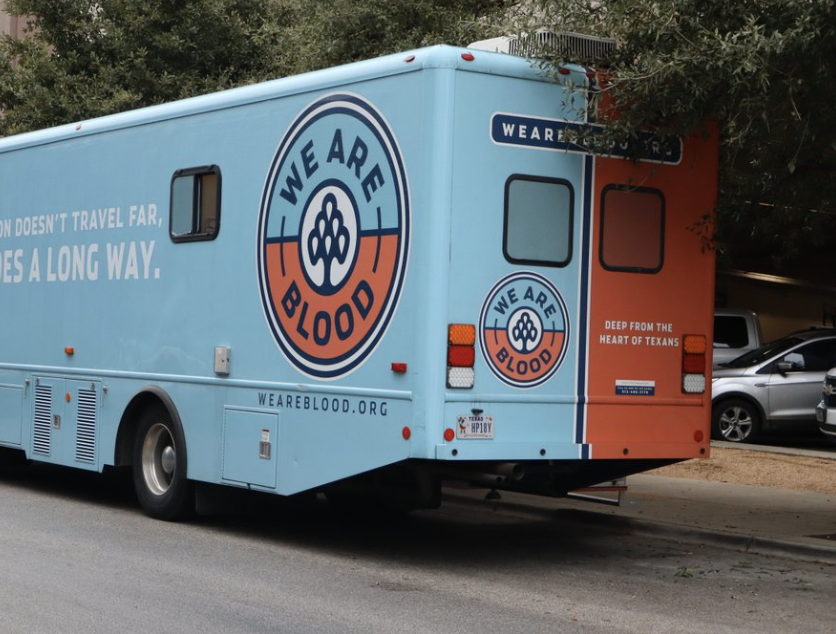
The good news, however, is that Texas is full of possible blood donors. Although only three percent of Texans have donated blood, sixty two percent of the population is medically eligible to do so. Donating is also totally free, with convenient donation sites spread throughout the state. In Austin, there’s eight permanent blood centers and trucks, sponsored by We Are Blood, that hold mobile blood drives.
Recently, one of these drives was held at St. Stephen’s. All Spartans who were over seventeen years old and over 110 pounds were able to donate. When I went in for my slot, the truck was full of students and teachers alike. I’d never given blood before; in fact, I’ve always been tense around needles. The desperate need in our community, however, inspired me to drag a friend to the truck for emotional support, complete all my health forms, and face my fears. The honest truth is, giving blood doesn’t hurt that badly. When they insert the needle into your inner elbow, which they recommend looking away from, it feels a bit like a pinch and a twist. Even when I freaked and tensed my whole body up, which you really shouldn’t do with a needle in your arm, it didn’t hurt for more than ten seconds. Once the needle’s in, you don’t feel the blood leaving. In a desperate attempt to finish as soon as possible, I had chugged four water bottles before my appointment. Hydration helps your blood thin out and get collected more easily, and it took about ten minutes for me to donate a pint. While the nurse wrapped my arm in tape, I asked if there was anything I needed to be ready for. “Will I get sick? Do I need to lie down? I can still drive home, right?”
I was happy to learn that all I needed to do was drink some water and not do any serious weight training for a few hours (I was devastated). When I took my sweater off later that night, I was surprised to see the flash of the green tape in the mirror; I’d forgotten I’d even donated. Some people do experience more serious fatigue and nausea, but after dinner and a good night’s sleep, I was back to normal. That night, I got my donor account with my blood type and free checkup info; I realized, later, that it was crazy I knew my three zodiacs and not my blood type. Within twenty-four hours, my blood volume was back. After four weeks, my red blood cell count was totally restored. What I was left with, however, was a free t-shirt and the knowledge that I had helped two to four people in my community.
There are a lot of questions around blood donation (and the We Are Blood Website does a great job at answering them). “Can I donate?” Probably, yes. “Should I?” Almost definitely. And often, “What blood do they need the most?” In the current drought, the answer is yours.